
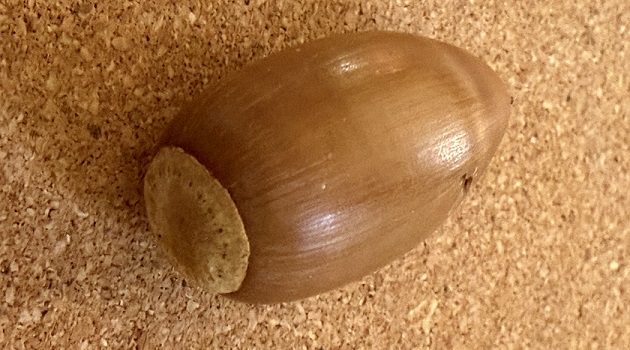
From little acorns mighty oaks grow.
By Tom Poland, A Southern Writer
TomPoland.net
Though my hair was chestnut brown, I was green, a young writer hoping to create something memorable. I needed inspiration and I found it in a novel, Shining Tides. Winfield Brooks wrote it. The inside flap said the book had a kind of splendor. It does. As for me, I was not yet ready to write such a story, but I tried.
Brooks set his story along Cape Cod in the 1950s. His book details striped bass fishing, interweaving the life of a massive striped bass named Roccus with a narrative involving romance and murder. The bass interested me. Romance and murder did not. You see, I worked as a scriptwriter for natural history documentaries and a writer for wildlife features. The bass, she was my focus.
An excerpt: “Saturn was the evening star. The moon had crossed the meridian with the sun and was invisible from earth; it was dark o’ the moon. When the blanket of stars lay close and heavy on the water, shimmering and opalescent, Roccus broke through it with a roll and tail-slap and fell back on her side. The stars scattered, danced, reformed in wavering pattern. The bass slashed the surface, sinuating on her right side, then on her left, leaped half clear. Three yellowish-brown sea lice fell from her shoulder and were promptly devoured by a cunner, which an hour later was eaten by a crab, which, before morning, was swallowed by a master sculpin.” And so it went, nature lessons and splendor.
Might I create something similar? Not much of fisherman, I chose an oak to share its life with us. I still have the typed, original manuscript, 1,500 words. Should have been 800. Maybe 650.
My oak towered over a bottomland for generations. It started out when a gray squirrel buried an acorn in a clearing near a stream. A red-tailed hawk struck down the squirrel. Throughout the winter the acorn lay dormant, its promise of greatness asleep. When spring warmed the earth, germination began.
The first twenty-five years passed. The oak lifted its limbs to sunlight as xylem tissues piped water and minerals from the soil to leaves. Water was, in a very real sense, the oak’s blood. On hot days as many as 1,000 gallons of water vapor evaporated through the leaves into the atmosphere.
At one time, the oak was both old and young, and its gifts to life were many. It fed wildlife. Its roots held the earth when spring rains brought floods. It tempered the weather, giving cool shade during the summer and a wind-break against winter’s frigid blasts. It blessed the land with color come fall.
One chill day a man slashed three gashes in the oak’s bark. The oak was now a corner marker on the boundary of land to be cleared in spring.” And so it went.
My oak died from heart rot but even in death it served life. Fungi, insects, and animals found in it one last source of food and shelter. A stump near a stream in a bottomland remained the only trace of a mighty oak that had stood for over 200 years.
Looking over my story today, I cringe. When I wrote it, the personal computer didn’t exist, and Google didn’t exist. You took your mind to the library. But — something more vital was missing. Experience. Many years of tapping the keyboard lay before me. Lessons to learn such as “Less is more.” Experience and studying people would teach me something invaluable. People don’t speak in complete sentences. That opened a whole new world as rhythm and reality go. Another lesson? Learn to be your own editor.
A bass and a tree. It was a step in the right direction for a young writer learning the ropes.