
Richland County Vector Control and the South Carolina Department of Public Health have confirmed the county’s first mosquito samples testing positive for West Nile virus during this year’s mosquito season.
In response, Vector Control has increased surveillance in affected areas and will conduct targeted adult and larval mosquito treatments as needed to reduce mosquito populations and help protect public health.
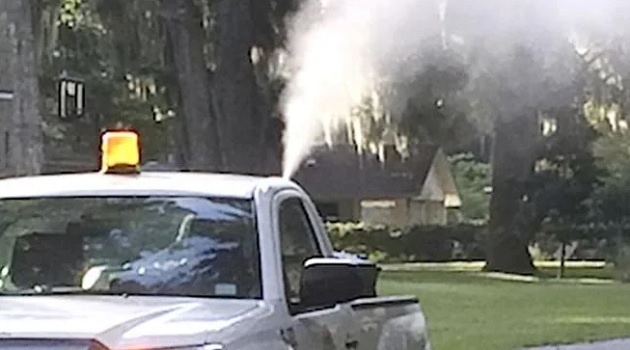
County crews will use spray trucks to apply pesticide between midnight and dawn, although operations could begin earlier depending on weather and other conditions. Residents are encouraged to remain indoors when a spray truck is nearby so crews can effectively treat the area. Vector Control does not apply pesticides to private property.
West Nile virus is transmitted to people through the bites of infected mosquitoes. Most people who become infected do not develop symptoms, but some may experience fever, headache, body aches, fatigue, rash, vomiting or diarrhea. In rare cases, the virus can cause severe neurological illness, particularly among older adults and people with weakened immune systems.
There is no vaccine or specific treatment for West Nile virus, making prevention the best defense. The virus occurs naturally in South Carolina, with late summer and early fall typically bringing the greatest risk for mosquito-borne disease transmission.
Richland County’s surveillance program uses mosquito traps throughout the county to monitor mosquito populations and test for mosquito-borne viruses, including West Nile.
“Routine surveillance allows us to identify disease activity early and respond quickly to reduce the risk of transmission,” said Olin Towery, manager of Richland County Vector Control. “While the risk to the general public remains low, residents should take simple precautions to protect themselves from mosquito bites.”
Vector Control recommends residents follow the 5 D’s to reduce mosquito bites:
- Dusk and dawn: Limit outdoor activities during dawn and dusk, when mosquitoes are most active.
- Dress: Wear loose-fitting, long-sleeved shirts and long pants when outdoors.
- DEET: Use an EPA-registered insect repellent according to the product label.
- Drain: Eliminate standing water around homes by emptying buckets, flowerpots, birdbaths, tarps, toys, tires and clogged gutters where mosquitoes can breed.
- Doors: Keep doors and windows closed or make sure screens are in good repair to keep mosquitoes outside.
Residents can report areas of standing water or excessive mosquito activity and request Vector Control service by calling 803-929-6000. County Vector Control services are limited to areas outside Columbia city limits. Residents within the city should call 803-545-4229 for mosquito services.
More information about West Nile virus is available from the Centers for Disease Control and Prevention